
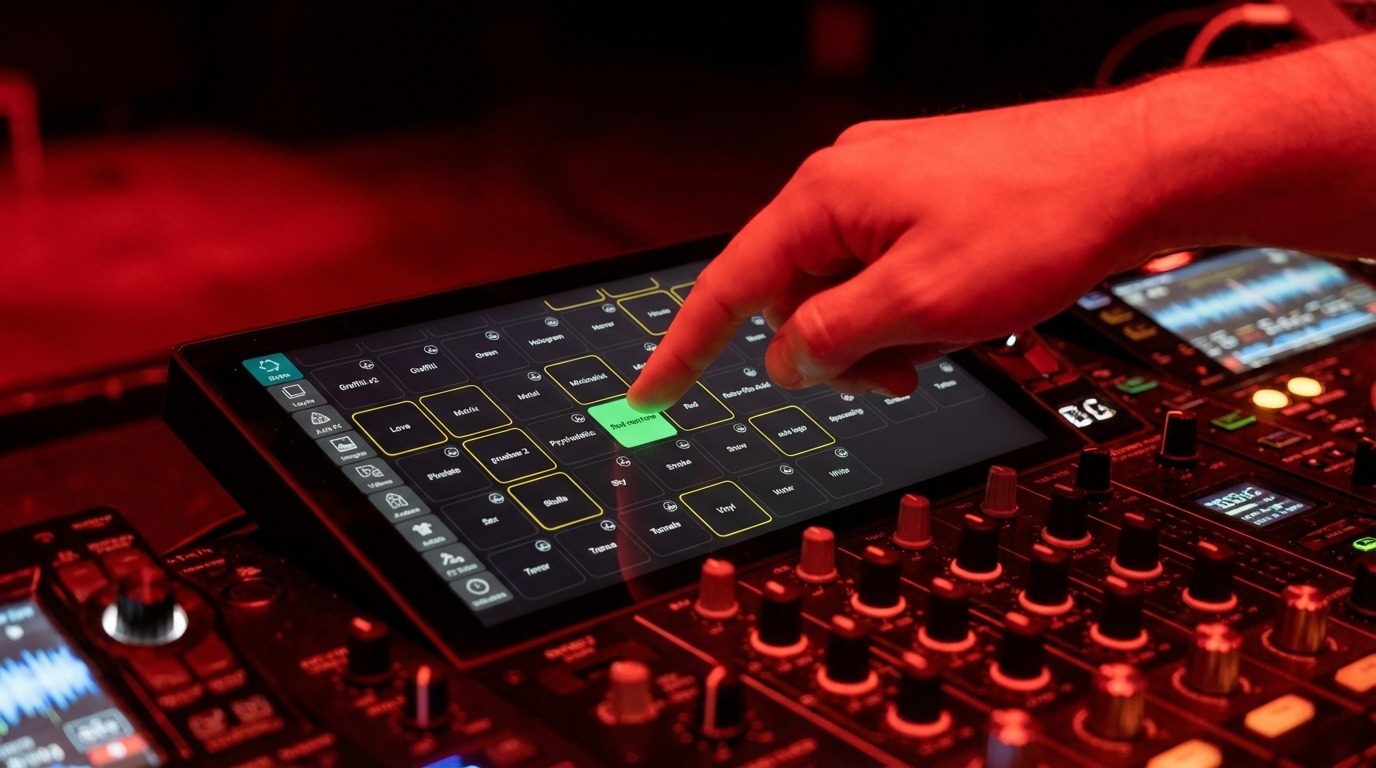
The Best HeavyM Alternative for DJs Who Also Need DMX
Looking for a HeavyM alternative that also controls DMX? HeavyM runs visuals. DjMirror Pulse, the best HeavyM alternative for DJs who need lights too, runs visuals and DMX.
HeavyM is genuinely good at what it does. If you’re running an LED panel and want visuals that track the music without thinking too much about it, it works. Simple interface, decent built-in effects, low setup time. For a lot of DJs, that’s the whole job.
The issue is DMX.
Most DJs who have an LED wall also have fixtures. Par cans, moving heads, a wash bar. The sort of rig that used to need a lighting tech at the back. Now you’re doing it yourself, which means HeavyM on one laptop and SoundSwitch or something similar on the second. Two windows. Two things to sync. Two things that can fail mid-set.
If that’s you, DjMirror Pulse is worth a look.
What this HeavyM alternative does differently
The main reason DJs look for a HeavyM alternative is DMX. HeavyM has no DMX output. You need a second app for the lights, two sync clocks, and two things to troubleshoot mid-set. Pulse handles both from one app.
HeavyM’s strength is the interface. You drop it onto a new machine and it’s fairly obvious what does what. The visual presets look good on screen without much configuration, the BPM sync is reliable for most set formats, and it handles looped content well. If you’re a mobile DJ with no DMX in the rig at all, HeavyM makes sense.
Where it runs out
HeavyM has no DMX output. HeavyM does one job and does it cleanly. The software doesn’t see your fixtures, can’t control a moving head, and has no way to trigger a strobe or fog machine on the drop.
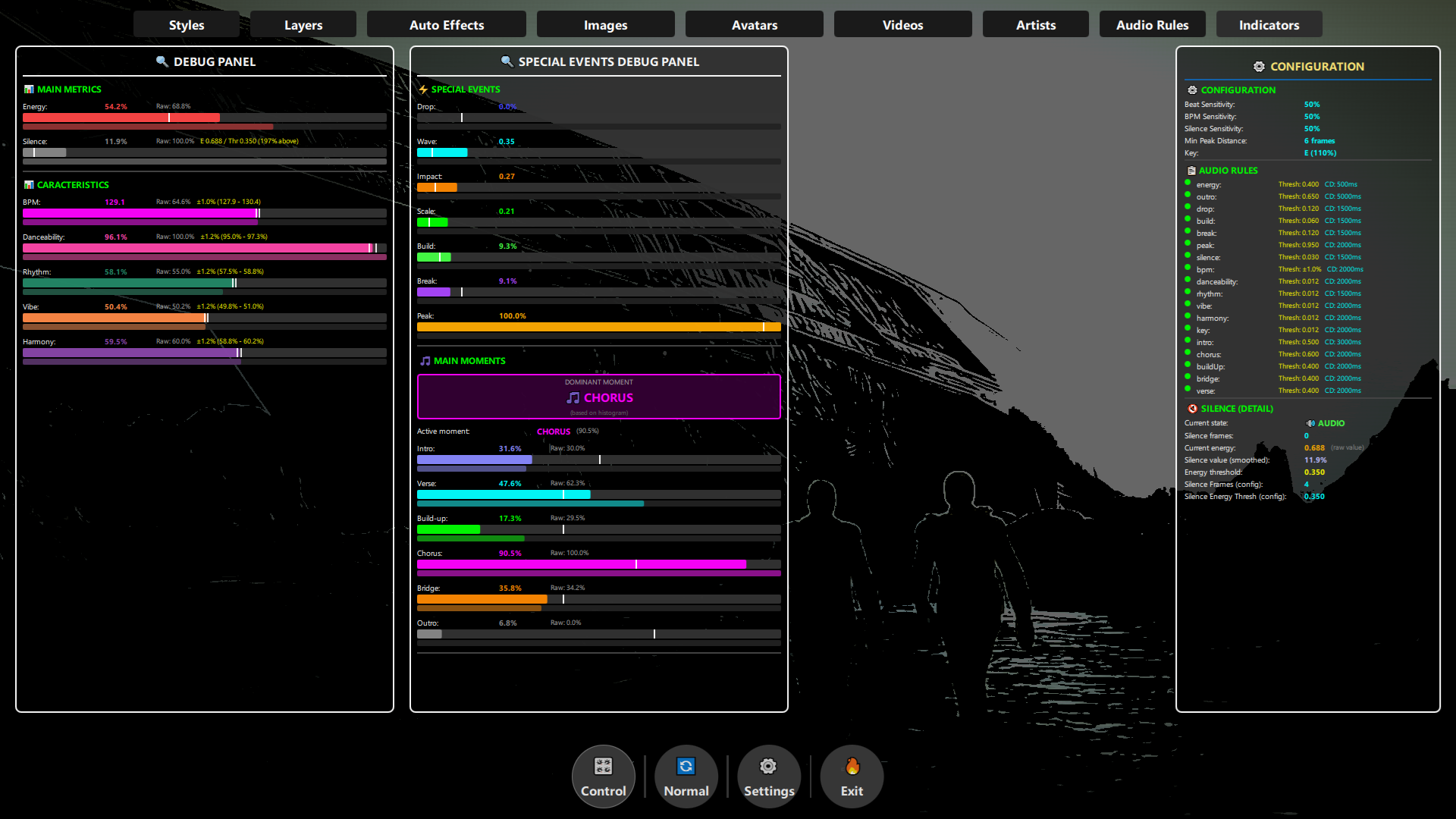
There’s also the audio analysis side. HeavyM syncs to BPM, but it doesn’t read song structure. It doesn’t know a build from a breakdown, or when the drop is two bars out. DjMirror Pulse analyses the track continuously, detecting the whole structure as it plays. Intro, verse, build, drop, break, outro. All of that drives both the visuals and the lights.
What DjMirror Pulse does instead
A useful way to think about DjMirror Pulse is as one app doing what HeavyM and SoundSwitch do separately. It sends video to your LED wall and DMX commands to your fixtures, driven by the same analysis engine. When the drop hits, the visuals and the lights respond to the same event, not just the same tempo count.
The visual engine runs on GPU, so effects hold up on a proper LED wall without frame drops. The fixture database covers most of what you’ll find in a mobile rig, and the auto mode gets you a working show without building scenes manually. Add your lights, pick a style, press play.
HeavyM vs DjMirror Pulse
| HeavyM | DjMirror Pulse | |
|---|---|---|
| LED wall visuals | Yes | Yes |
| DMX output | No | Yes, native |
| Song structure detection | No | Yes |
| Moving head control | No | Yes |
| Traktor integration | No | Yes |
| Price | From €15/month | $99 one-time or $179/year |
Who should switch
If you’re running HeavyM alongside any DMX software and managing two setups is the problem, DjMirror Pulse is worth the trial. You’re not losing anything HeavyM gave you, and you’re dropping a whole laptop from the rig.
For weddings, corporate events, or any gig where the booth has both a screen and fixtures, the consolidated setup makes the show easier to run while you’re mixing.
Who should stay on HeavyM
No DMX in your setup and no plans to add any? HeavyM is fine. It does visuals cleanly and the price is low. Pulse would be more than you need.
If you’re working with a dedicated lighting desk and a separate VJ, specialist tools make more sense than an all-in-one.
Questions
Does DjMirror Pulse work with my existing LED wall?
It outputs to any display your computer recognises. If your LED processor shows up as a monitor, it’ll work.
Can I keep HeavyM and just use Pulse for DMX?
You can run them alongside each other, but the point of Pulse is you don’t have to. The visual engine covers what HeavyM does and the DMX layer comes with it.
What DMX interfaces does it support?
Enttec, DMXKing, Eurolite, and anything FTDI-compatible. The main USB-DMX adapters all work.
Is there a free trial?
Fourteen days, no card required.
Also comparing against Resolume? The best Resolume alternative for DJs who need DMX.
Also looking at Synesthesia? Here is how Pulse compares as a Synesthesia Live alternative.