
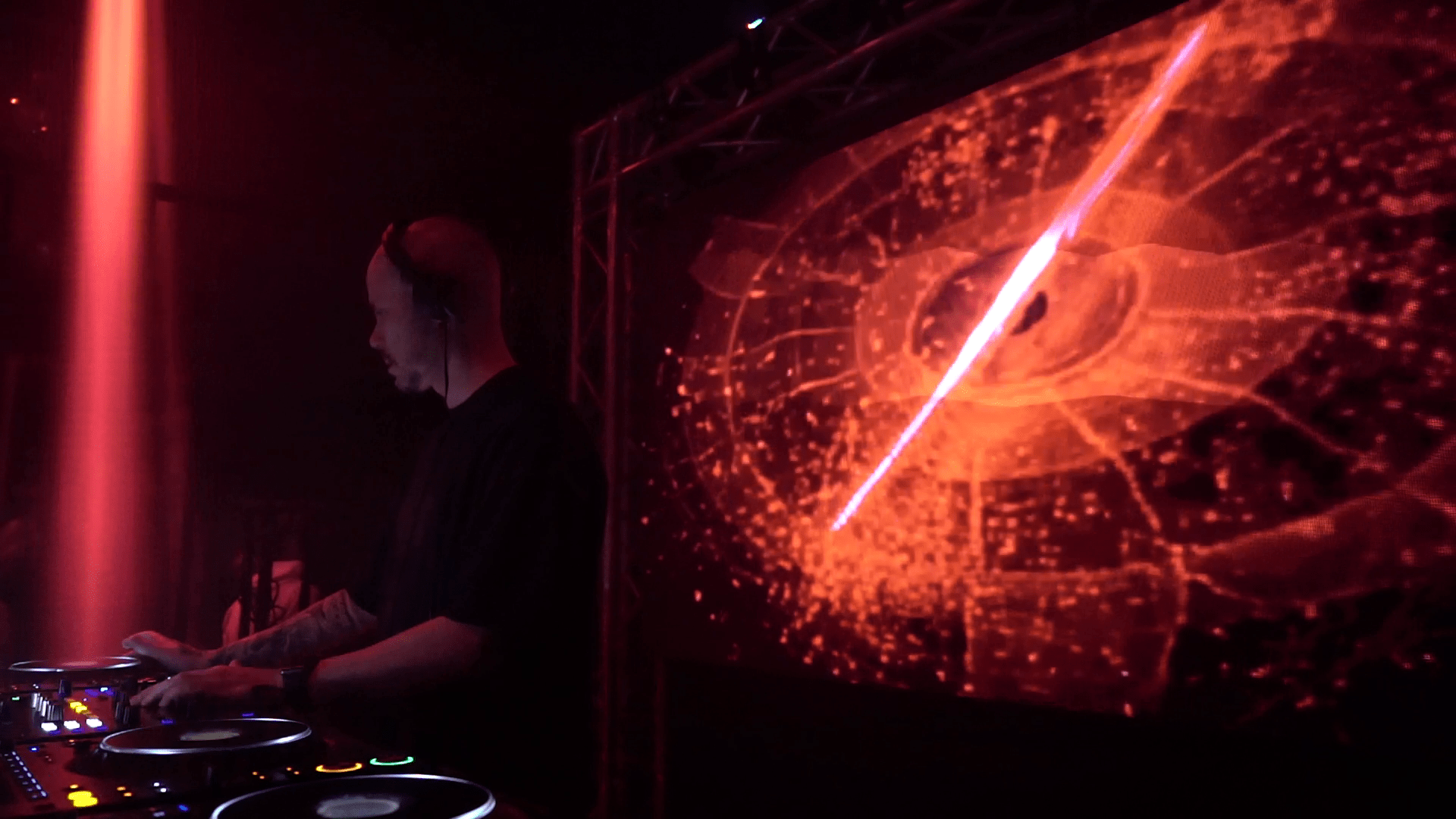
Difference Between DJ and VJ: The Complete Guide
Music. Visuals. Lights. One DJ. One Machine.

At a festival or club night, you’ve likely seen two separate setups — the DJ at the decks controlling the music, and a VJ behind a laptop controlling what plays on the screens. They work together, but they’re different jobs.
With DJMirror Pulse, that split disappears. The software listens to your music and drives the visuals and DMX lighting automatically — so one DJ can run the entire show.
DJ vs VJ: Side-by-Side Comparison
“I Finally Have the Show I Always Wanted”
“Playing solo gigs used to mean boring screens or spending on a VJ I couldn’t always afford. Now DJMirror Pulse does it for me and my shows look better than ever.” — Rony Rex, DJ & Radio Host.
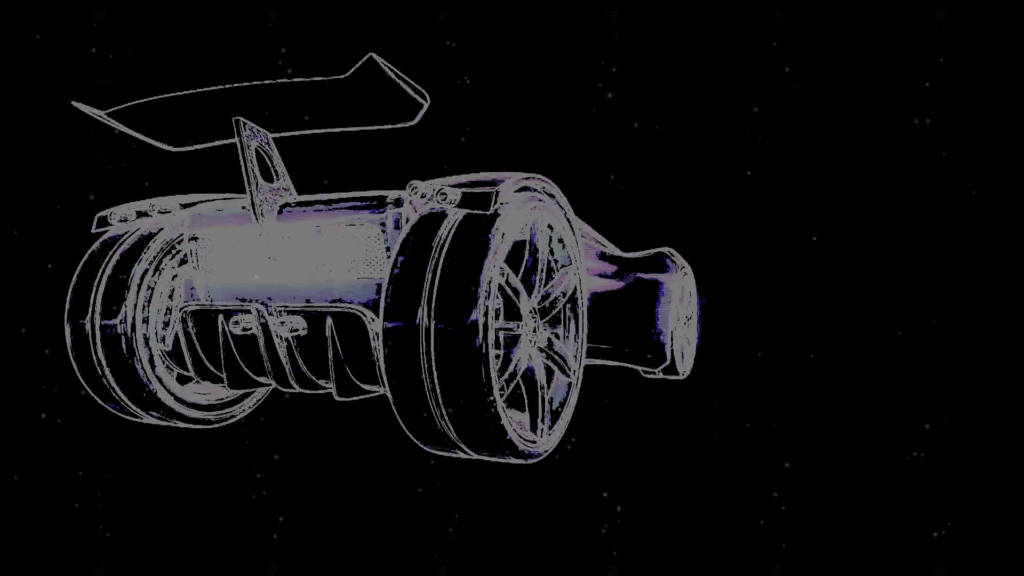
Your Brand on Screen — Automatically
A VJ’s job isn’t just playing loops — it’s making the show feel branded. DJMirror Pulse includes Hologram visuals and logo overlays that put your brand identity on screen, synced to the music, without any manual operation. The VJ experience, minus the VJ.
When Should a DJ Also Be a VJ?
“I play solo gigs and can’t afford a VJ every show”
→ DJMirror Pulse. The entire DJ + VJ equation solved in one app. Automatic audio-reactive visuals, automatic DMX lighting, thousands of built-in loops. One laptop, one performer, professional show.
“I want to add visuals for the first time”
→ DJMirror Pulse free trial. Install and you’re running visuals the same day. No VJ skills required, no clip library to build, no manual triggering to learn. The 14-day trial has zero limitations.
“I’m a dedicated VJ working with a DJ”
→ Consider adding DJMirror Pulse to your setup. Many professional VJs use it to handle automatic DMX lighting while they focus on visual mixing in Resolume Arena or VDMX. It removes the lighting layer from your manual workload.
“I want both roles — music AND visuals — at festival main stage level”
→ Build a layered setup. DJ at the decks with DJMirror Pulse driving automatic reactive visuals and lighting. Add a VJ running Resolume for screen content on major productions. The roles can overlap more than you think — especially with software that removes the manual VJ overhead.

Windows and macOS. No credit card. No setup headaches.
Frequently Asked Questions
What is the difference between a DJ and a VJ?
A DJ (Disc Jockey) controls music — selecting, mixing and sequencing tracks to create a live performance. A VJ (Video Jockey) controls visuals — triggering and mixing video loops, animations and effects in real time, usually in sync with the music. In a traditional setup they are two separate people. DJMirror Pulse lets a solo DJ do both automatically.
Can a DJ also be a VJ?
Yes. With software like DJMirror Pulse, a DJ can run audio-reactive visuals and DMX lighting automatically without a dedicated VJ. The software listens to the music and drives the visuals in real time — BPM, key, song structure and energy all analyzed at sub-12ms latency.
Do I need a VJ for my DJ event?
Not necessarily. If you use DJMirror Pulse, the software acts as your VJ — selecting visuals, syncing them to the music, and controlling DMX lighting automatically. You stay focused on the music while the software handles the full show. For larger productions with projection mapping or multi-screen setups, a dedicated VJ still adds value.
How much does VJ software cost?
Professional VJ software like Resolume Arena costs $899. VDMX5 runs $199–$349. DJMirror Pulse costs $99 (Perpetual) or $179/year (Professional with commercial rights) — and includes thousands of built-in loops and automatic DMX, which other tools charge extra for.
What’s the fastest way for a DJ to add visuals to their show?
Download DJMirror Pulse, connect your audio source, and press play. The software selects and plays visuals automatically. Most DJs are running a full audio-reactive visual show within 10–20 minutes of installing — no prior VJ experience required.
Does VJ software work with DMX lighting?
Traditional VJ software like Resolume requires manual DMX programming or a separate lighting app. DJMirror Pulse includes automatic DMX control — lights react to BPM, musical key and detected song structure (intro, build, drop, outro) without any manual setup or triggering.
Try DJMirror Pulse free for 14 days — Windows and macOS. No credit card, no watermark, no lock-in.
Related Posts
Free VJ Software for DJs: What You Get and What You’re Missing
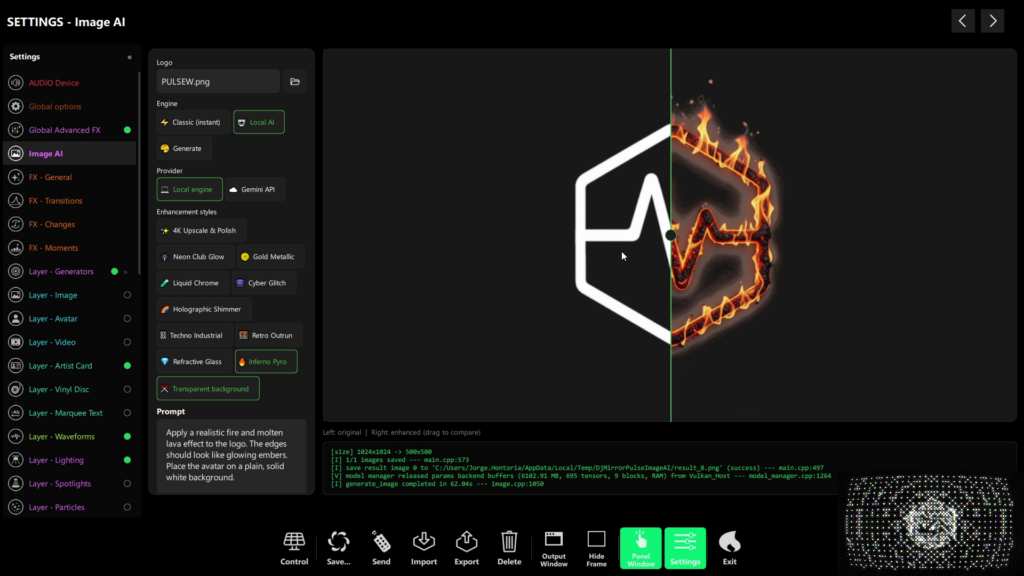
What’s New in DjMirror Pulse: Art-Net & AI FX
How to Make Your Own DJ Visuals (Without Being a Designer)
Want unlimited visual styles?
You’ve reached today’s free download limit. Get every style — plus audio-reactive visuals and automatic DMX lighting — with DjMirror Pulse.
Download free — 14-day trial No credit card required